Tuesday, August 22, 2006

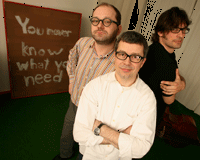
Mary Timony, Garland of Hours

at Fort Reno, 8/17/2006


20060817_EPS0019
Originally uploaded by furcafe.
Oh the sadness. The last Fort Reno show of the summer. Actually, not so much sadness for us. We packed a picnic, the dog, and headed out to enjoy a beautiful evening and some nice music. Also provided a great head-start to our vacation (we went away for the weekend as a little anniversary treat).

Show was good. I've heard Garland of Hours several times. Consistently, there are technical problems with the sound equipment. Fort Reno is always a little sketchy in terms of buzz and interference, but somehow Amy Domingues brings the hum and buzz and unintentional noises to any venue. Fortunately, that doesn't seem to get in the way of the music. Amy opened her set with a couple of solo pieces, including a Lungfish song arranged for cello and voice, with some looping. Very nice. Her band this time out included Mary Timony (guitar) and Devin Ocampo (drums) plus a bass player who's name I don't know. The band was solid. Amy's strange mix of rock music oddly colored by early music came together in it's usual fragile way - which is a good thing.


20060817_EPS0032Crop
Originally uploaded by furcafe.
Mary Timony played with a trio: herself on guitar/voice, Devin Ocampo, drums (this was the lineup for the last show I saw) but now they've added a bass player - Chad Molter, who also plays with Devin in the band "Medications." I prefer the trio over the duo lineup - especially with two-thirds of Medications included. They played mostly new material, I think... I only recognized one song from "Ex-Hex" - Backwards and Forwards, with a nifty new intro. The new material asks the question: is prog-rock cool again? And the answer is yes, with certain limitations. Seems like her live shows are sloppier than the records so it's hard to read too much into the new material beyond the obvious. It's following the trajectory of Ex-Hex - but (as you might expect with two-thirds of Medications) nifty shifting patterns bordering on "math rock" appear frequently and to great effect. The last tune, which was the last song of the summer at the park, ended the season with a psychedelic flavor, Chad played synth-organ, and the guitar part was fed through some kind of filter effect - providing a tasty swirly combination.

Photos by Flickr user furcafe.

Wednesday, August 16, 2006

X and Rollins Band

at 9:30 club, 8/15/2006

We saw X a few months ago, same club, same "greatest hits revue" style show. The good news: they still sound great. The other news: well, we'd seen it before - and recently.

Rollins band raised some issues for me. Let's start with the easy stuff:

  1. They totally rocked.
  2. The band is excellent, Marvin Gibbs (bass) and Chris Haskett (guitar) are terrific - and make for a super heavy combination. I always loved Haskett's approach to guitar lines - he rarely plays chords (fairly unusual for a hardcore / metal type sound, but Gibbs has it covered for him) and his lines are interesting. Sim Cain is a heckuva drummer, although it seemed a little over the top with metal cliches (two china cymbals, two floor toms, double bass pedal - all used exactly as you might expect) but let's not overlook the fact that they are a super-tight well oiled machine and they rocked as they are known to do, which is better than most.
  3. Rollins performed with incredible intensity.

Now the harder issues to sort through: I guess part of the problem is nostalgia. Much of my motivation for going to this concert was to rectify the fact that I hadn't seen Rollins live before - back when his work was of greater importance to me than it is now. Not that the work is any less relevant; adrenaline fueled songs about hate, anger, deception, and various shades of misanthropy are as timeless as ever. My own appetite for punk / hardcore / metal has diminished over the years, and I'm wondering what that means now?

The opening act, The Riverboat Gamblers, play straight ahead (retro?) punk, but they're young guys. It's as if they are trading only in signifiers: we are punks, we wear skinny jeans and all black, we play kinda sloppy but fast and loud and the singer romps all over the club, climbing up anything he can get his hands or feet on. The music? not much there... So what does this mean? Does "punk rock" not mean anything anymore? Has it been so fully assimilated into mainstream culture that there is no viable way for the music to retain any sort of meaning as cultural criticism? Maybe they were just a bad example?

It was with this preface that Rollins took the stage, playing a rapid fire litany of old songs. Good old songs that I have a special fondness for. And they were played as well as ever, and with the same intensity. But the context is different now, isn't it? Maybe that's the issue... 20 years ago, the 9:30 club was a very different place (literally), and it represented a certain "scene." There was a certain type of music that thrived there, and there was a certain subculture around that. Now it's a much much larger venue with no particular stylistic focus. Any act that can fill the place will play there, whether it's rock, punk, pop, alt-country, hip-hop, reggae, etc. Isn't this also an analogy for a concurrent cultural shift? Is there really any particular subculture around "underground" rock music, or is it just a fashion statement?

I don't have any answers.. haven't really figured out what the questions are either, but the evening left me kind of confused.

Mark Jenkins covered the show for the Washington Post. Click Here for his review.

catching up

missed my chance to keep up with the shows... won't get to writing about:
I.E.D. - Improvised Experimental Diva (Susan Oetgen's Fringe show)
Prufbox (another Fringe show)
The Evens at Fort Reno 7/31
Joe Lally at Warehouse Theater 8/5
"Four Islands" - a vocal recital presented by Stephen Blier and the Wolftrap Opera Company, 8/12. There's an exhaustive review on DCist. My comments aren't so much about the program as about the audience. Maybe I'll get my rant written down at some point.

Tuesday, July 25, 2006

Never Swim Alone

at the Canadian Embassy, 7/24/2006. (Part of the Capital Fringe Festival)

Well executed - clever writing, good acting. The show was a hit at the Edmonton Fringe. However, seemed to just present two stereotypical characters: Men. Business Men. Not much substance beyond that. Interesting use of rhythm, unison delivery, etc. - but not much substance?

Monday, July 24, 2006

Luxury Lofts Coming Soon

at Woolly Mammoth Theater, 7/23/2006 (Part of the Capital Fringe Festival)

It's a show by Arachne Aerial Arts. They were fabuloso. Live music by Alvin Hill. He rocked - perfect match for the show. Andrea and Sharon were amazing. The only trouble is that I have a hard time watching them because I get nervous - they're up very high in the air and doing things like Sharon hanging off a trapeze, with Andrea suspended only by Sharon's feet. I can't really describe it... one of those things that you just have to see for yourself. Anyway, great job folks! So glad I got a chance to see it.

Thursday, July 20, 2006

Jolie Holland

at Jammin Java, 7/15/2006

Jolie Holland rules. This show was so damn good. I'm soooo glad I made the trip out to Vienna, Virginia. Jammin Java is in a strip mall in the northern Virginia suburbs - not exactly the hippest spot for cool music, but on this particular night it was the place to be.

Sean Hayes opened. I had mixed feelings about his set - really liked a couple of his songs, particuarly the more surreal / mystical ones. Halfway through his set, Ms. Holland joined him and provided backing vocals. She quietly, unobtrusively, totally stole the show with her inventive and surprising harmony lines. I have a theory that she treats perfect fourths as consonant intervals, and that's at the root of her strange melodies - and especially true when she sings harmony.

Her set was terrific from start to finish. She played with a trio: drums and lead guitar. She played piano, guitar, and a cigar box fiddle. That fiddle thing sounds crazy, and good. Good. Real good. Everything she did sounded real real good. She's simply dynamite - super talented performer.

More importantly (to me) she's also one of the most gifted songwriters around these days. My friend Dave wrote an interesting essay about two songs from her album Escondida - "Black Stars" and "Goodbye California" - two of my favorites. Unfortunately, she didn't play "Black Stars," saying something like "...it has so many crazy key changes in it. I don't want to mess it up." I guess that makes me feel a little better. I taught myself that song a few months ago (because it totally slays me and I wanted a peek "under the hood") and I can't sing it very well. Mostly, that's due to the fact that I'm a very bad singer, but I'm happy to hear that she's a little reluctant to tackle it live herself...

If I had more time, I'd write lots more about this show because it was so wonderful in so many ways. But for now we'll have to leave it like so. She's great. The show was great. A very special evening. Go hear her yourself - you won't regret it. Buy her albums - they are all exceptional and worth every penny and then some. In a perfect world, she would be the most popular songwriter - and singer -in the world. Oh well. Our gain, I guess, since this way we get to hear her in small venues. Her new record, "Springtime Can Kill You" is as good as "Escondida." You should buy them both. And "Catalpa" too. Get 'em all. "Black Stars" is one of the most gorgeous, profound, darkly wonderful love songs ever written. And on the new record, the closer, "Mexican Blue" is another love song of equally stunning greatness. The opening track, "Crush in the Ghetto" is also too fine to miss out on.

Wednesday, July 19, 2006

Kallmeyer, Merella, Sebastian, Whitehead & Zook

at Sangha, 7/10/2006

Nice event. Wonderful that Ted Zook put together a benefit show for Sangha - they've donated space to host so many outstanding performances and events, it was nice to finally give a little something back...

Mark Merella is a genius drummer. Totally fantastic. Mike Sebastian, well, I'm a big fan... Mr. Whitehead is someone I hadn't heard before - played trumpet and various related horns, with great patience (he was great at sitting out when necessary) and has a great ear. His interactions with Mike (tenor sax and saxello) were wonderful. I've only heard Doug Kallmeyer once, with his group 302Acid. I had no idea he was such a good improviser. Ted's monster gizmo rig was very impressive, even though it wasn't functioning properly (so he said, I thought it sounded good).

Shadow Puppet Drama from Java

at the Freer Gallery's Meyer Auditorium, 7/6/2006

This was really cool. It's been a few weeks now since the show - so only time for quick thoughts...
1. What a great opportunity. I've never seen anything like this live.
2. Too bad the gamelan players were mostly Americans - I'm no expert but I thought some of it was a little shaky. I could be wrong - see the "i'm no expert" clause above.
3. Damn that was long (two hours +)
4. Thank you Freer and Sackler Galleries, Smithsonian and Michael Wilpers. This show rocked.

Friday, July 07, 2006

Sean McArdle

at the Black Cat, 7/3/2006


(i'm very late getting to this... so it's gonna be a quickie) Sean McArdle performed with a nice little band (Ben Azarra, drums; Lida Husik, bass; lead guitarist who I don't know by name). Band was great - characterized primarily by what I'll call "elegant restraint." All working together clearly in service of the songs themselves. McArdle is a local performer who actually writes good, thoughtful songs. Too bad vocals were buried in the mix (typical Black Cat Backstage bad sound). Promising performance and I'm eager to hear him again... missed him at Fort Reno, but hopefully there will be another chance soon.

Monday, July 03, 2006

Songs from the Nitrate Hymnal


at Warehouse Theater, 7/1/2006

Back in 2003, Bob Massey and company staged an ambitious, genre defying, rock / chamber / opera show called the Nitrate Hymnal. Some of the backstory about the production, and this new concert version is covered in a feature in last week's Washington Post Weekend section...

Originally, the work was presented by Washington Performing Arts Society, and supported by a grant from Creative Capital. Now, they've successfully raised the dough (Jean Cook is a genius) for a recording from the Copland Fund, and got some Meet the Composer money to pay for two performances, one in Brooklyn and this event in DC (plus an informal brunch the following day which I missed, sadly).

Several "numbers" from the show have been reworked, and turned into a song cycle. This plays to Bob's strengths as a songwriter - and the new arrangements are really well done. Performers included members of Gutbucket, Anti Social Music, and Bob's group, the Gena Rowlands Band.

The performance was excellent. The ensemble was very strong, and pulled off a truly inspiring performance of DIY / Punk influenced chamber orchestra music. Personally, I preferred hearing Bob sing many of the songs himself vs. the original staged version that he didn't perform in. Hai-Ting Chinn was spectacular - bringing bona-fide operatic chops to the stage, which actually (surprisingly) worked perfectly with the more "natural" rock/folk style singing of Bob and Daisy Press.

The theater was full (no surprise after they sold out four shows at a larger venue for the staged version) - and this was not your typical classical music audience.

The recording is on sale now on Lujo records.

Monday, June 26, 2006

Washington Musica Viva

at Atlas Performing Arts Center, 6/25/2006

Another winner from WMV... the third, and final, concert in this season's series at Atlas - exploring "Jazz at Our Roots," showcasing music by DC composers past and present.

The show opened with an instrumental arrangement of a song by Dr. Ysaye Barnwell, "Song of the Exile." It turned out to be the first of several outstanding arrangements by Charley Gerard.

Next up, "Six Short Pieces" by Lawrence Moss. I think they did these pieces at the Rattner a couple of years ago? A collection of charming miniatures for alto sax and piano, rendered beautifully by Rhonda Buckley (sax) and Carl Banner (piano) - who always make a great team.

Mary Howe's "Two Rilke Songs" were the most traditional fare on the program, basically standard German romantic art song. Not my personal cup of tea, but still nice to hear her music. Howe made many important contributions to musical life in Washington, but I haven't actually heard her music before. Not sure I need to hear it again... (ouch that was mean)

Michael Strand's "Tango Affligido" was given an energetic and ballsy reading by Jodi Beder (cello) and Carl Banner (piano). It's hard for me to hear "nuevo tango" and not instantly compare the music to Astor Piazzolla, which is unfair and unfortunate to any composer. That being said, Strand's work certainly was effective.

The first half of the program closed with three Duke Ellington songs, arranged by Charley Gerard for voice with clarinet, violin, and cello. Very interesting choice of instruments, and the arrangements were superb. The ensemble also did a great job... Bringing jazz to the concert stage via "classical" players presents many problems and first on my list is rhythm: classical players often have trouble swinging - Jodi Beder (cello) and Sonya Hayes (violin) had no trouble finding the pocket, and even executing some inventive pizzicato comping together - including a short violin phrase played pizzicato "quasi guitara" which was a nifty effect, and used sparingly which made it work nicely. Jodi handled the walking bass lines perfectly, juggling her role as timekepper (since there's no drummer in this combo) and harmony (since there's no comping instrument in this combo either). She was clearly up to the task. Clarinetist Ben Redwine is equally at home in jazz or classical contexts, so this whole thing is a non-issue for him... and he dropped several burning solos so there wasn't any doubt. "In My Solitude" was arranged simply for voice and clarinet. Well, deceptively simply, I should say. Delicious. My only hang-up is on the singing. Mezzo soprano Karyn Friedman is spectacular, and has delivered knock-out after knock-out on WMV programs. However, the "classical players struggling to play jazz" thing reared its ugly head when it came to singing the Ellington songs. Her usual assured poise was weakened, maybe lack of rehearsal? Maybe she was just out of her element. Personally, I'd rather hear jazz singers handle the singing - not really a fair criticism in this case, just my own personal bias. In any event, I want to heap praises on WMV for bringing Ellington to the concert hall. I have a personal "grudge" of sorts that Ellington's music (especially his concert music) has never found a regular home in the concert halls of the United States. He was clearly one of the greatest composers in American history and it's about time that the mostly-white classical music "establishment" dug into his work more often than a perfunctory black history month offering.
(end Ellington rant) (for more, check out Graham Lock's "Blutopia" for an enlightening account of Ellington's reception in the press and concert halls of the US during his lifetime)

Intermission was also a hit, thanks to Cameron's Cookie Cubby. Vegan cookies!!! What could be better?

After intermission, came Charlie Barnett's "Memphis TN" for violin and piano. A "nice" piece, very engaging and accessible. I shouldn't be such a backseat composer, but I would've handled the form differently: the piece starts with one idea (a bluesy melody with a two-step country flavored piano accompaniment), then eventually moves into a contrasting slow / open "B" section that's really perfectly constructed. Unfortunately, the "A" section returns (without much of a transition) and then the piece closes with a cliche-ridden blues cadenza. Sonya Hayes (violin) brought out all the blues and other "popular" music elements nicely - with genuine feel and nuance, not cold imitation which so often happens when classical music invokes popular music. But the material suggested more depth than we got from the finished product. Why did the "A" section have to come back? I was so happy in "B" section-land.

Poet Brandon Johnson then read a selection of his works. I'm no literary critic, for sure, so I'll just say, it was good stuff, although a bit too long given that there was still more music to come...

The show closed with "Black Bottom Stomp" by Jelly Roll Morton, another perfect arrangement by Charley Gerard for soprano sax, clarinet, trombone, tuba, and piano. The ensemble really shined on this one - lots of energy, and a real freewheeling dixieland / ragtime sound. Not your average chamber music group!

All the living composers on the program were present for the concert - a nice bonus. Plus many more living composers in the audience. I can't wait until Atlas gets a grand piano (hopefully before next season's WMV series at the Atlas), and I'm looking forward to next year's "WMV at the Atlas" programs.

Thursday, June 15, 2006

Day and Taxi

at The Red and The Black, 6/13/2006

Swiss jazz trio featuring Christoph Gallio (soprano & alto saxophone), Christian Weber (double-bass), and Michael Griener (drums). I think they're in the States now because of an appearance at this year's Vision festival in New York City. Lucky for us, they came to DC as well...

They played a collection of compositions by Gallio. Somewhat difficult to describe - his style is very thorny and fragmented. Very few lyrical passages or what might come off as "lines." Mostly skittering bursts of notes, but still with a very clear contour and logic. Much of the music is notated - it was hard to tell what was notated and what was improvised, with the exception of a few bass solos. The sax "solos" were much in the same style as the notated material. In some ways, Anthony Braxton comes to mind as a reference point, but the actual musical vocabulary is quite different. Sort of like post-classical music, mixed with the jazz idiom, put through an atom smasher, and then carefully notated.

The ensemble was very strong - really tight playing. The show proved to be an interesting composition lesson, although after a while a certain same-ness among the pieces became apparent. That's not necessarily a criticism -- just seems like Gallio has found a very specific niche to work in, and is exploring this narrow area in great detail.

The venue is quite nice - hopefully it will last, and continue to host cutting-edge music.

Thursday, May 25, 2006

Washington Musica Viva

at The Dennis & Phillip Ratner Museum, 5/23/2006

Another winning concert from WMV... Opened with Bach's Cantata No. 82 - sung beautifully by Gary Poster. It was done as a chamber piece - one player per part, which created a gorgeous kind of intimacy. Soprano saxophone was substituted for oboe, which really worked nicely. Rhonda Buckley played it beautifully. Her soprano sax playing has a warm, rich tone that blended nicely with the strings - a much more luxurious sound than an oboe. I hope they made a recording - I wish I could link to an mp3 so you can hear how that worked...

Next up, Faure's La Bonne Chanson. As I've written before, I'm not such a huge fan of classical vocal music, but this piece is an exception to my rule (and now I can add Cantata no. 82 to that list as well - seems like anything Gary Poster sings winds up on my growing list of exceptions). Mezzo soprano Karyn Friedman delivered a rock solid performance - teetering on the edge of losing control, just as the poems are. I think this is the first time I've heard this set of songs done by a female voice? Well, it works just fine that way. The ensemble was excellent (string quartet and piano).

After intermission (where all of Cameron's cookies were enthusiastically devoured), we heard Ernest Bloch's Piano Quintet #1. It was given an energetic and convincing performance, but I wasn't really won over by the piece. Lots of homophonic string writing, there were very few sections where the strings really got to function independently of one another. There were a small handful of "modern" elements and effects, but overall it sounds pretty conservative to me. I think that might be my hang-up with Bloch's work overall... it's not "modern" enough to be interesting for unique sounds and textures, and not conservative enough to stand up as "neo-classical" either. The quintet certainly has its moments, but I felt like it's a bit longer than it needs to be. That being said, the performance was super. Carl Banner (piano) was joined by Sally McLain (violin), June Huang (violin), Betty Hauck (viola), and Amy Leung (cello).

Wednesday, May 17, 2006

Aw shucks

I missed this show on Monday night because I had a gig at the same time. Hopefully Pretty Girls Make Graves will appear in DC again soon?

Friday, May 12, 2006

National Symphony Orchestra

at the Kennedy Center Concert Hall, 5/11/2006

Thanks to an online 75th anniversary promotion, Cameron and I enjoyed a special treat: tickets to hear the NSO for only $19.30. We got to sit in "prime orchestra" seats, normally $65 each - way out of reach. Thanks NSO! Greg Sandow is right... offer cheaper tickets, program some interesting music, and young people (like us) will be delighted to hear orchestra concerts.
Stravinsky + Bartok + $20 = sign me up.

There's a review in today's Washington Post. One comment about the ticket price promotion: just because we're "young" and not subscribers, please don't assume that we don't know anything about classical music. That wasn't an issue with the concert at all... but the tone of the review made me nervous.

So about the music: two words - hell yes. Stravinsky's "Symphonies of Wind Instruments" is a treat to hear live, I've only heard recordings. Contrary to Post critic Ginsberg, this piece never occurred to me as an "academic study" (although I did study it in grad. school) - I felt like it came off exactly as promised in the program notes: a series of "short litanies." The winds and brass instruments all sounded warm and gorgeous. Even the bassoons.

The Mendelssohn Octet in E-Flat, Op. 20 was performed by the entire string section and sounded great. Now I'm curious to hear Leonard Bernstein's string orchestra treatment of Beethoven's C-Sharp quartet, Op. 131 -- I know he recorded it, but I haven't actually heard it yet. I was always suspicious of performing chamber pieces with a zillion players doubling each part -- but this totally won me over. Any "infelicities of ensemble" noted by Mr. Ginsberg went totally unnoticed by me. I was quite mesmerized with their ability to maintain the clarity of the chamber piece, and deliver the added lushness of a full string orchestra. Delicious.

I had mixed feelings about the Chavez "Toccata for Percussion Instruments." Slatkin introduced the piece by calling it the second important percussion piece in the repertoire after Varese's "Ionisations." I'm not so sure about that, but who am I to argue with the Maestro. I'm spoiled, I guess. Hearing the So Percussion Ensemble playing music by John Luther Adams at last year's Otherminds festival made this piece so very tame in comparison. And maybe hearing the automated "Ballet Mechanique" at the National Gallery last weekend didn't help either?

The program ended with Bartok's "Suite from the Miraculous Mandarin" which just plain rocked. I think Bartok is to classical music as Caspar Brotzmann is to rock music. His work is rigorous, and quite satisfying intellectually, but as you're listening it doesn't hit you in the cerebellum, it punches you in the gut and leaves you totally breathless. This was an especially nice bit of programming by Slatkin and Co. - after hearing the sections of the orchestra on display, the Bartok made for an amazing showpiece - that's not just a showpiece. Also a nice choice to do this one instead of his Concerto for Orchestra, which I think is a little less "accessible" (although still plenty accessible) - and also would have been too long to tack onto the end of this particular program.

So, wow. That was a real treat. I hope us "young people" will have more chances to hear the NSO before Slatkin retires.

Thursday, May 11, 2006

Sarah Azzara

at the Black Cat, 5/4/2006

Sarah rocked the Black Cat - it was a low-key CD release party for their new album, "It Turns Us On." The new record is quite excellent. Hear some of it and buy it at sarahazzara.com.

The band is a trio now, since their lead guitarist left to go back to school to become a CPA. I'm all for accountants that rock, but I think I preferred the quartet lineup. Two guitars really helped keep the balance - this time the bass and drums seemed a little overpowering. But seriously, check out the record. It's a winner.

Tuesday, May 02, 2006

John Vanderslice

at Iota, 4/29/2006

I got behind and haven't posted about any shows for a while... I'm not going to take the time to go back and catch up... we'll just have to deal with the gap in coverage.

John Vanderslice and his fabulous band played to a packed house at Iota. Damn his band is good. He's a very engaging performer, clearly very comfortable on stage, and immediately likeable. He conducts the performance as though we're all longtime friends and actually pulls it off. Of course it helps that the music is solid - and beautifully performed. Did I mention that his band is awesome? They are.

They've been on the road for a while, and it shows (in a good way). Everything sounded tight, but there was still enough room for all of the players to mix up some details and keep things fresh. At one point, Vanderslice stopped the show to listen to a change the keyboard player made to a delay setting, that changed the rhythm of a small accompaniment figure - this was followed by a demonstration so we all knew what he was talking about, and the drummer reluctantly gave a quick lesson in hemiola (and the drummer added a little triplet lick at the end of the following song to put it in context).

Basically, every song sounded lovely. They played for a good long while, and still didn't have time for a few favorites (no "dear sara shu" or "bill gates must die" or "speedlab" for example) but they delivered many of my personal favorites (i.e. "me and my 424," "angela," "time travel is lonely" and many others).

I splurged and bought a vinyl copy of his latest album, Pixel Revolt. It's pressed on two 180 gram discs that run at 45rpm -- and the sound quality is really spectacular (to be expected from an artist who's known as much for being a studio dork as he is a songwriter and performer). So much better than hearing the album as mp3's. But if you want to hear some mp3's, he's got loads of them on his site, including a few tracks from Pixel Revolt. Start here, but it's worth browsing the site for some older stuff too. (and I mean "studio dork" in the most respectful and affectionate way)

Page France opened. Stupid Pitchfork retains the well-deserved "stupid" prefix with this review. (although they did get a high score) I'm not sure why the review is so caught up in their music being "Christian." Certainly most of the songs deal with themes such as faith and love, served up with generous helpings of biblical imagery - but does that mean someone like Leonard Cohen was writing Christian music?

Wednesday, March 15, 2006

Arts Advocacy Day

When I started this little blog excercise, I made a decision to keep it focused very narrowly - only thoughts and impressions of live performances that I've seen. I have intentionally avoided posting anything about arts management - which is a significant portion of how I earn a living.

I'm going to bend my rules a bit for this quickie: Today's Post has a nice article by Phillip Kennicot about the lecture at the Kennedy Center last Monday, presented by Americans for the Arts as part of their Arts Advocacy Day activities. He really put his finger on the "big questions" facing the arts in America - but I think failed to make one important distinction: Who is the audience for this arts advocacy message?

Americans for the Arts has been very effective lobbying congress regarding arts funding - and has found similar success at the state and local level around the country based on a strategy of using an "instrumental" approach: meaning they talk up the economic impact of investing in the arts, and the benefits of arts education -- as opposed to talking up the "intrinsic" value of the arts (like how the arts provides an opportunity for transformational personal experiences - you know, the powerful stuff... I'm sure everyone can name some artworks that have changed and/or shaped their lives: a book, a play, a poem, painting, an album that you couldn't live without, etc). This strategy is working in the legislative arena.

Over the last few years, the Wallace Foundation and others have dumped lots of money into a study dealing with arts advocacy - it's simply referred to as the "Rand Study" by those in the know... it was conducted and published by the Rand Corporation. This study claims that existing arts advocacy efforts are missing an important component: namely the intrinsic value of the arts. Here's where things get a little dicey. Americans for the Arts have proven that nuts and bolts tangible benefits make a compelling case for legislators - so they're sticking with that (and rightly so, I think). However, there's certainly a need to have a broader public conversation about the value of the arts -- especially these intrinsic values.

Some efforts are underway in this area... a national initiative called LiNC (Leveraging Investments in Creativity) has been formed to address the needs of individual artists - as indicated in a large national study that was originally under the same name. (That study used to be online here, but it's gone missing?) There's a local initiative as part of this project, being housed at the Community Foundation, called the "Creative Communities Initiative." I have mixed feelings about how that's progressing... but can't really talk about it because I'm on the steering committee and we are, I think, under some vague confidentiality agreement -- so I'm not really sure I'm supposed to mention that it exists? Well, they're having a public event in April so I think I can at least say that and not be breaking any rules...

Anyway, blah blah blah... just wanted to point out the Kennicot piece in the Post really...

Here in DC, since there's no voting representation in congress, we spend Arts Advocacy Day at the Wilson building lobbying the City Council. Strange that this local advocacy effort is missing some key players... did anyone spot any staff members of the Cultural Alliance? I don't think so... and I won't name other names here in public... but there are a few other notable local arts leaders who were absent.

Ok, no more arts management rants on this blog.

Beth Orton with Willy Mason

At 9:30 Club, 3/12/2006
(guest blogged by Cameron Mcphee)

Jon told me I could guest blog about this show because I was the one who “dragged” him to it. Ok, that is not actually how he put it, but I figure it’s only fair that he go to a few chick concerts with me since I am often the only "chick" in the room at some of his shows.

Actually, I think Patrick Foster wrote a really right-on review of the show in the Washington Post

I won’t try to repeat that. Bottom line, she really was fantastic. Cough or not, she not only has such a powerful voice, but I think she has a really unique sound. As the article hints at as well, the most striking thing about this show was that all of her new songs (from her latest album Comfort of Strangers) sounded even better live than they do on the CD. Honestly, as a lover of her older stuff, I had my doubts when I first heard this album, but after Sunday night, I have decided that these songs are at least as good, deep, and powerful as her older hits. Interestingly, I was... not disappointed... but under-whelmed by her acoustic renditions of her older stuff including two of my three all-time favorite Beth Orton songs, "Sugar Boy" and "Feel to Believe." Maybe it was because it just sounds so different without all the electronic mixing or maybe her new stuff coupled with her terrific back-up band just sounded so darn good. For the record my favorite new songs from the show had to be her opener, "Rectify" and "Safe in Your Arms."

Singer-songwriter Willy Mason opened in a duo performance with violist and singer Nina Violet. While I feel like his set was neither here nor there, I did learn one thing... If you recall from one of Jon’s previous show blogs, I think every band benefits from the deft use of the accordion. Well, it turns out the same is true for a well-played viola. It's just such a great sound and I think Mason and Violet take advantage of this fact very dexterously. Other than that, I think Jon and I agree that Mason doesn't really get the crowd's attention as an opening act. His songs are subtle and quiet and in most instances redundant. And the fact that I was continually distracted by the annoying woman at the bar below me, speaks to his inability to engage the crowd. Apparently Nina Violet has just released her first solo CD which I actually look forward to hearing. She has a very beautiful voice and is a great string player (I think she also plays the cello).

All in all, this show definitely re-vitalized my love of Beth Orton's music and I am glad she is not stagnant in her style, that she is allowing her music to grow with her.

Thursday, March 02, 2006

Heart of Gold

at E Street Cinema, 3/1/2006

The film, "Heart of Gold," is a Neil Young concert, filmed by Jonathan Demme. Normally, I wouldn't post about a movie, but Demme has a way of making films of live performances that really capture the essence of the live performance experience, and use all the tricks and tools at his disposal to create a kind of hyper-real experience. Remember "Stop Making Sense" and "Swimming to Cambodia"? The guy's got a gift... and more obscure, remember the PBS performance art series, "Alive from off center"? That was too good to last - and he had a hand in that too...

Anyway, there are many good resources already online where you can learn more about this beautiful film. I first heard about it thanks to Greg Sandow's blog post. There's also an interview w/ Young and Demme on Studio 360:
[link to transcript]
[or stream the segment, requires RealPlayer]
[or download the Studio 360 podcast for 2/12/06 - this is the segment included as the podcast for that week. here's the feed address]
They were also on "Fresh Air." Someone's got a good publicist...

I love the new songs in "Prairie Wind" - and many of his old "hits" sounded fabulous as well. Kudos to Neil Young (and the audio mixing team) for achieving the impossible: not letting Emmylou Harris steal the show. She certainly added a great deal, but her presence wasn't overpowering. (I only mean that as a huge compliment re: Ms. Harris' abilities...)

The performance was staged in a bizarrely anachronistic way - I guess to make it seem timeless? Costumes were a bit over the top, but the performance was so fabulous, and the cinematic treatment of it so perfectly executed, I really have no complaints. It's an absorbing document of a mature artist at the top of his game. 4 stars. A must see. Better than Cats.

unrelated: a hilarious review of Scott Stapp's show at 9:30 club thanks to DCist.